
- All
- Product Name
- Product Keyword
- Product Model
- Product Summary
- Product Description
- Multi Field Search
Views: 0 Author: Site Editor Publish Time: 2026-09-22 Origin: Site


While off-the-shelf travel irons suffice for generic retail, OEM brands, hospitality chains, and niche travel retailers often face a strict ceiling. Standard models frequently fall short of premium expectations in modern markets. Sourcing a reliable travel iron requires balancing portability, safety compliance, and global voltage adaptability. Retailers and hoteliers quickly discover standard units lack essential safety features. Deciding to commission a custom unit depends heavily on specific return-on-investment thresholds. You must also evaluate target market compliance regulations carefully. Furthermore, identifying user-experience gaps in current market offerings clarifies your product strategy. Designing from scratch or modifying an existing mold brings unique challenges and distinct rewards. We will explore how to identify exactly when customization makes business sense. You will learn the exact specifications to modify for better performance. Finally, we will show you how to mitigate supply chain risks safely.
Standard market models often compromise on either steam output or physical weight. This creates mixed customer reviews across e-commerce platforms. You see this frequently in minimalist travel communities. Minimalist travelers truly despise carrying dead weight. Liability issues also arise in hotel environments. Standard units sometimes overheat if left unattended. They might leak boiling water onto expensive luggage.
When you evaluate the return on investment for customization, consider volume thresholds first. You must analyze when production volume justifies the upfront cost. Creating new injection molds is expensive. Tooling costs often range from ten thousand to twenty thousand dollars. Usually, ordering a few hundred units does not cover this custom tooling. Thousands of units, however, change the math entirely. You amortize the mold cost across a larger inventory footprint.
Brand differentiation matters equally. Moving beyond logo-slapping requires actual structural improvements. You might integrate leak-proof silicone seals for high-altitude flights. Changes in cabin pressure often cause standard tanks to leak. Customizing a travel steam iron requires distinct problem-solving. A custom order is viable if it solves a documented high-friction user problem. For example, standard irons short-circuiting on European 220V grids is a massive pain point. Competitors frequently ignore this electrical vulnerability. By addressing these specific issues, you capture market share securely. Your product earns better reviews. Customers trust your brand for their international trips.
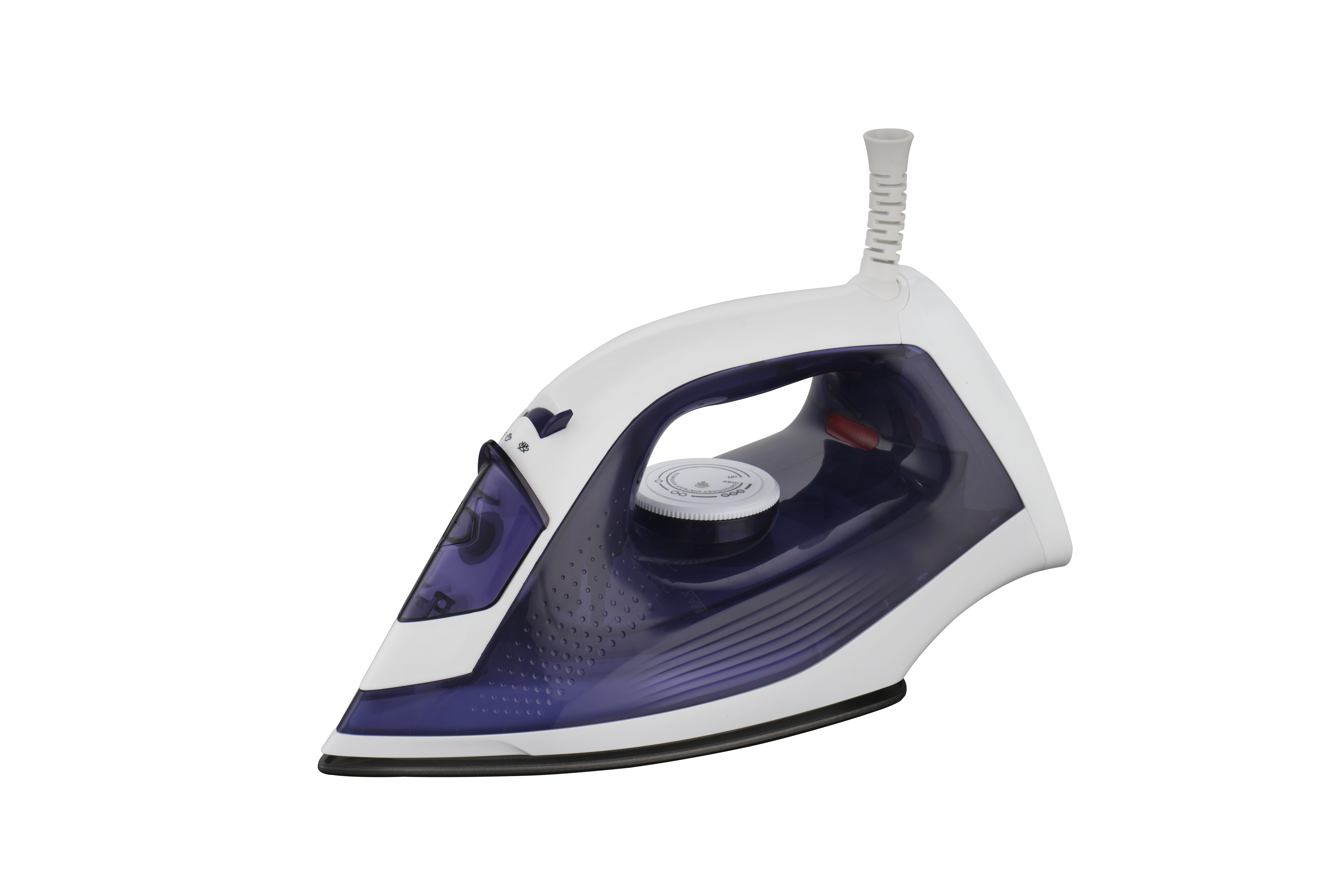
Balancing portability and efficacy demands strict engineering trade-offs. You want a compact footprint for small suitcases. Users still demand functional utility for wrinkled garments. Upgrading the internal hardware transforms the entire product experience.
When evaluating dimensions, heating elements rank highest on the priority list. Upgrading to advanced PTC (Positive Temperature Coefficient) heaters ensures faster pre-heat times. You can achieve readiness under thirty seconds. Fast heating delights rushed business travelers. Do not increase wattage beyond travel-safe limits. Many hotels restrict high-wattage appliances to prevent tripped breakers.
Water tank capacity versus weight presents another engineering challenge. You must find the exact milliliter sweet spot. A reliable steam iron provides enough output for one outfit. Typically, a 50ml to 80ml tank hits this optimal balance. It should never violate ultra-light carry-on limits. Anything larger becomes too bulky for a weekend duffel bag.
Soleplate engineering also dictates real-world performance. Upgrading from standard aluminum to ceramic or titanium coatings makes a huge difference. These advanced materials offer much better glide over delicate fabrics. They significantly improve scratch resistance during transit. Standard aluminum scratches easily against zippers in a packed suitcase.
Ergonomics play a vital role too. You must reinforce folding handles structurally. These handles represent the most common point of mechanical failure. If the hinge snaps, the device becomes completely useless. Upgrading the locking pin mechanism prevents accidental collapse during pressing.
Customization Matrix: Standard vs. Upgraded Components
| Component | Standard Specification | Custom Upgrade Option | Primary Benefit |
|---|---|---|---|
| Heater | Traditional Wire (60s+ heat) | PTC Ceramic (<30s heat) | Faster readiness |
| Soleplate | Basic Aluminum | Titanium or Ceramic Coating | Better glide, scratch resistance |
| Voltage | Single Voltage (110V or 220V) | Auto-sensing Smart Circuitry | Prevents electrical fires globally |
| Handle | Basic Plastic Hinge | Reinforced Locking Mechanism | Prevents accidental collapse |
The global infrastructure challenge frustrates many international travelers daily. Standard plug adapters are highly insufficient for heating appliances. They frequently pose dangerous fire hazards. A basic travel adapter does not convert electrical voltage. It only changes the physical pin shape. If you plug a 110V appliance into a 220V socket, you risk melting the internal wiring instantly.
Hardware-level customization eliminates these electrical risks entirely. You should specify physical dual-voltage switches. Users can toggle between 110V and 220V manually. Auto-sensing smart circuitry offers another premium alternative. This advanced PCB switches voltages automatically without user intervention. It removes the risk of human error completely.
Customizing plug configurations directly at the manufacturing level helps target specific regional demographics. Strict UK or EU market penetration requires localized safety features. Fused plugs are mandatory in the UK, for instance. Specifying these details ensures your product works perfectly upon arrival.
Compliance and risk mitigation protect your brand reputation. You must ensure the custom design clears necessary legal hurdles. North American markets demand strict UL certification. European regions require CE and RoHS compliance. Hospitality chains demand specific auto-shutoff requirements to prevent room fires. A hotel procurement team will reject units lacking motion-sensor shutoffs. Meeting these travel steam iron specifications prevents costly product recalls. It also lowers corporate insurance liability.
Moving past middlemen is essential for customized hardware procurement. You must identify direct manufacturers capable of OEM and ODM production. Simple trading companies cannot modify injection molds. They only source existing, off-the-shelf products. You need factories owning their actual production lines.
Use a structured evaluation framework to audit potential manufacturing partners.
Watch out for serious supplier red flags during negotiations. Unusually low MOQs for fully custom molds indicate trouble. A travel steam iron supplier offering this often cuts corners. They might use recycled plastics instead of virgin materials. Evasiveness regarding safety certification documentation is another major warning. If they cannot produce a valid UL test report, walk away immediately. Trusting an unverified supplier with heating appliances is a massive liability.
Navigating production realities tests every hardware brand eventually. A massive gap exists between perfect CAD designs and dirty factory floor realities. Plastic shrinks as it cools inside the mold. Mold tolerances drift over time during mass production. You must prepare for these physical deviations in advance.
Risk mitigation steps ensure a smooth product launch. Breaking the project into distinct phases protects your capital investment.
You should buffer your inventory launch dates accordingly. Expect unexpected delays when importing new electrical goods. Thorough phased rollouts prevent disastrous product launches. They keep your customers happy and your brand reputation intact.
Requesting a custom travel iron is not about aesthetics. It is a highly strategic business decision. You solve specific mechanical, electrical, or compliance challenges for your users. The right modifications decrease return rates and boost long-term brand loyalty. Next steps dictate your market success. Buyers should audit their current customer complaint logs immediately. Hotel procurement officers must review guest feedback regarding room amenities. Draft a rigid specification sheet based on this empirical data. Use this detailed document before initiating RFPs with potential suppliers.
A: Minimum Order Quantities depend entirely on the level of customization. Modifying an existing model typically requires 1,000 to 3,000 units. Creating an entirely new mold from scratch is much more expensive. Manufacturers usually require 5,000 or more units to offset the heavy tooling and injection costs.
A: Yes, modifying existing molds is highly cost-effective. Minor modifications avoid expensive new exterior tooling. You can easily request internal wiring upgrades for better safety. Changing soleplate materials to ceramic or adding custom brand colors are highly feasible options. This approach accelerates production timelines significantly.
A: A realistic timeline spans four to five months. Expect one to two months for initial R&D and 3D prototyping. Tooling creation and required safety certifications take another one to two months. Final mass production generally requires one full month before the units are ready for shipping.


