
- All
- Product Name
- Product Keyword
- Product Model
- Product Summary
- Product Description
- Multi Field Search
Views: 0 Author: Site Editor Publish Time: 2026-10-30 Origin: Site


Nothing ruins a freshly laundered shirt faster than a sudden burst of white mineral flakes. You press the steam button expecting a smooth glide, but the appliance spits dirty, calcified water directly onto dark fabrics. This frustration stems from a fundamental mismatch between your local water supply and the internal hardware of your equipment. Hard water contains high concentrations of calcium and magnesium. When exposed to high heat inside a boiler chamber, these minerals rapidly calcify. They clog steam vents, degrade internal heating elements, and cause premature appliance failure. Finding a reliable steam iron for hard water requires looking past marketing jargon. You must understand the mechanical realities of scale prevention. A simple self-cleaning button will not save an iron in a high-mineral region. You need to evaluate dedicated mechanical filters, understand warranty implications, and recognize how specific hardware features dictate appliance longevity.
Terminology Matters: There is a distinct mechanical difference between basic "self-cleaning" functions and dedicated anti-calc systems; confusing the two leads to premature appliance failure.
Hardware Over Hacks: A purpose-built steam iron anti calc system (such as a resin filter or physical calc collector) is mandatory for households with water hardness exceeding 120 ppm.
Maintenance is Inevitable: No iron is entirely immune to scale. The right purchase decision simply shifts the maintenance from a messy, time-consuming chore to a quick, standardized process.
Water Compatibility: Understanding your local water hardness level is the baseline for determining whether you need a cartridge-based system, a mechanical collector, or a steam generator model.
Warranty Protection: Standard manufacturer warranties frequently exclude damage caused by limescale buildup, making built-in anti-calc technology a necessary financial safeguard.
Water quality directly dictates the lifespan of any steam-generating appliance. Pouring tap water into a reservoir introduces dissolved minerals into a high-heat environment. Understanding this physical process helps you select the right protective features for your daily laundry routine.
Steam irons operate through a flash-boiling process. Water drips from the reservoir onto a heated metal plate inside the boiler chamber. The water instantly vaporizes into steam. However, the dissolved calcium and magnesium do not vaporize. They separate from the water and remain behind as solid mineral deposits. Over time, these deposits bake onto the walls of the heating chamber.
This scale buildup triggers a predictable sequence of mechanical failures. First, you notice a reduction in steam output. The mineral crust acts as an insulator. It prevents the heating element from efficiently transferring thermal energy to the water. Next, the iron begins spitting white flakes or brown water stains onto your fabrics. Finally, the internal thermal fuse fails. The scale buildup causes the element to overheat, permanently destroying the appliance.
You cannot choose the right equipment without knowing your local water quality. Evaluating steam iron water hardness compatibility requires looking at specific measurement scales. Municipalities measure water hardness in Parts Per Million (ppm) or Grains Per Gallon (gpg).
Standard irons begin to fail rapidly when water hardness exceeds 120 ppm. At this threshold, specialized hard water features transition from optional add-ons to absolute necessities. If your water tests above 180 ppm, even basic anti-calc features struggle without rigorous maintenance.
When you pull up your local water quality report, look for the section labeled "Calcium Carbonate" or "CaCO3". Municipalities often report this in milligrams per liter (mg/L), which is directly equivalent to parts per million (ppm). If your report shows a number between 60 and 120 mg/L, you have moderately hard water. If the number jumps above 120 mg/L, you are in hard water territory. Anything over 180 mg/L is considered very hard. Do not guess your water quality. A ten-minute check of your local utility website saves you from buying the wrong appliance.
Water Hardness Level | PPM Range | Recommended Iron Architecture |
|---|---|---|
Soft to Moderately Hard | 0 - 120 ppm | Standard iron with basic self-cleaning thermal shock function. |
Hard | 121 - 180 ppm | Iron with a dedicated, removable mechanical calc collector. |
Very Hard to Extreme | 181+ ppm | Steam generator or iron with active ion-exchange resin cartridges. |
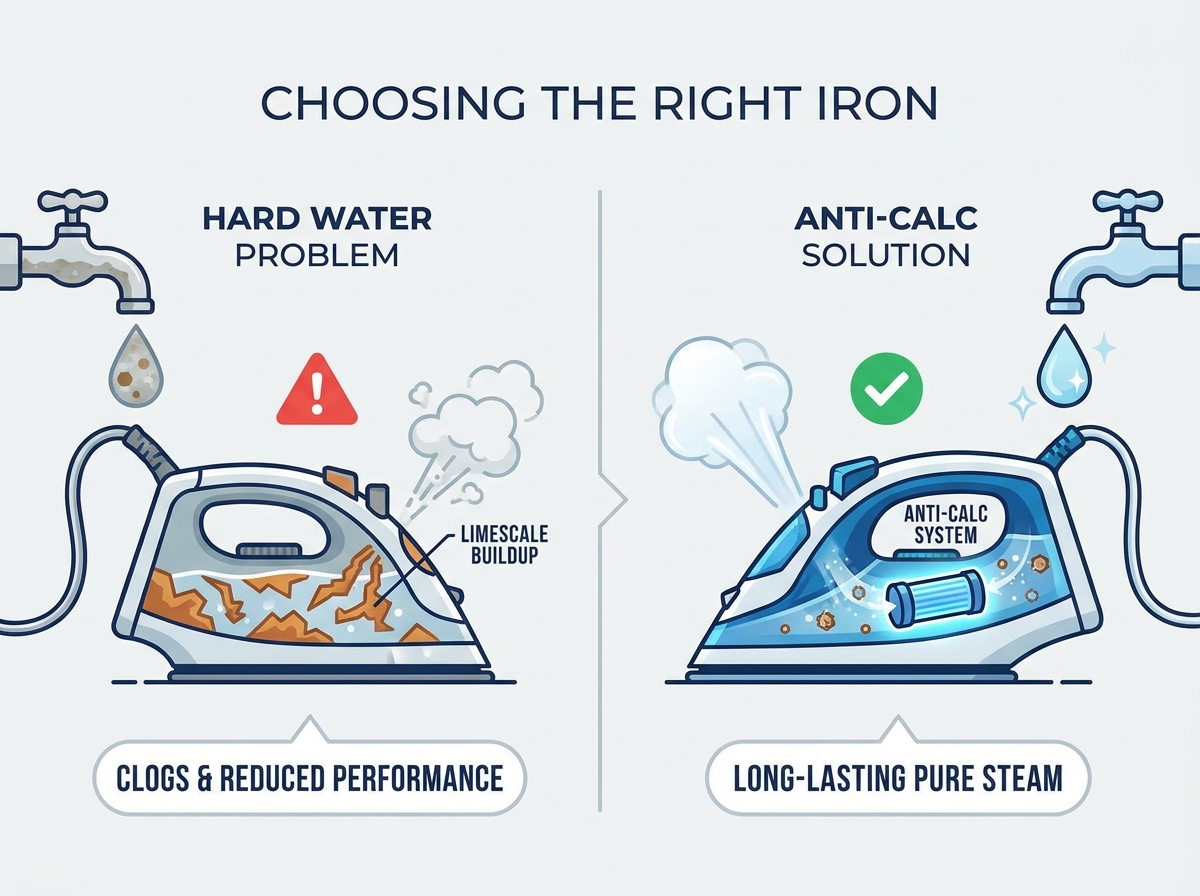
Manufacturers use various terms to describe their scale prevention methods. You must distinguish between passive flushing features and active filtration systems. Choosing the wrong technology guarantees poor performance.
Many consumers confuse basic flushing functions with active filtration. When comparing steam iron self cleaning vs anti calc systems, the mechanical differences are stark. A self-cleaning function relies on thermal shock. You heat the iron to its maximum temperature, unplug it, and hold a button over a sink. This dumps a large volume of water through the steam vents, flushing out loose scale.
Self-cleaning is only effective for mild water hardness. It serves as preventative maintenance, not a cure for heavy calcification. In contrast, true anti-calc systems provide active physical or chemical interventions. They trap, filter, or neutralize minerals before the water ever touches the heating element. This proactive approach prevents scale from forming in the first place.
Mechanical traps represent one of the most reliable solutions for hard water areas. These systems utilize centrifugal force or physical baffles inside the boiler chamber. As water boils and minerals separate, the internal geometry forces the solid scale particles into a removable spoon or chamber located at the base of the iron.
These collectors offer significant advantages. They are incredibly easy to empty. You simply pull out the collector, rinse it under the tap, and reinsert it. They require no replacement parts, making them highly efficient for daily use. However, they demand strict user discipline. If you forget to empty the collector regularly, it overflows. The scale bypasses the trap and floods the internal chamber, leading to immediate calcification.
Chemical filtration offers the highest level of protection against extreme water hardness. These systems use ion-exchange resin filters located inside the water tank. As water passes through the cartridge, the resin actively softens the water by neutralizing calcium and magnesium ions before vaporization occurs.
Cartridge systems are highly effective. They stop scale formation at the source. They are ideal for regions with water hardness exceeding 180 ppm. The primary drawback is the ongoing requirement for replacement filters. When a cartridge expires, the iron often locks up or flashes a warning light. You cannot operate the appliance until you insert a fresh filter. This ensures the internal boiler remains pristine, but requires you to keep spare cartridges on hand in your laundry room.
Beyond the specific anti-calc technology, the overall architecture of the iron dictates its durability. High-mineral environments demand robust construction and powerful steam delivery systems.
Think of a traditional iron as a compact car and a steam generator as a heavy-duty truck. Traditional irons force the heating element, the water reservoir, and the scale trap into a single handheld unit. Space is at a premium. The internal calc collector can only be so large before it makes the iron too heavy to lift comfortably. Because the trap is small, it fills up rapidly in hard water areas.
Steam generators remove the boiler and the water tank from the handheld unit entirely. They place these components in a massive base station that sits on your ironing board. This architectural shift changes everything. Manufacturers can install oversized, industrial-grade anti-calc valves in the base station. These larger valves trap significantly more scale before requiring maintenance. Furthermore, the base station generates massive amounts of steam pressure. When you press the trigger, the high-velocity steam physically scours the internal hoses, preventing scale from settling and hardening. If you iron more than five shirts a week in a hard water region, a steam generator is the most logical mechanical choice.
High steam pressure serves as a mechanical defense against scale. When evaluating the best iron for hard water, look closely at the bar pressure and grams-per-minute (gpm) burst ratings. High pressure physically blows out micro-calcifications before they have a chance to fuse to the internal chamber walls.
A weak steam burst leaves residual moisture and loose minerals inside the vents. A powerful burst clears the pathways completely. Steam generators typically offer 5 to 8 bars of pressure, providing enough force to keep internal channels clear of mineral debris.
The soleplate is the only part of the iron that makes direct contact with your garments. When an iron spits calcified water, those minerals bake directly onto the hot metal or ceramic surface. You must clean this exterior scale regularly to prevent it from snagging delicate fabrics like silk or synthetic blends. The material you choose dictates how aggressively you can scrub the soleplate without causing permanent damage. A scratched soleplate creates microscopic ridges that catch threads and ruin clothes.
Soleplate Material | Scratch Resistance | Ease of Cleaning Scale | Best Use Case |
|---|---|---|---|
Ceramic | Moderate | Excellent (Non-stick surface makes wiping scale easy) | Delicate fabrics, frequent light cleaning |
Stainless Steel | High | Good (Requires specialized cleaners for baked-on scale) | Heavy-duty pressing, crisp creases |
Anodized Aluminum | Very High | Excellent (Highly resistant to physical scrubbing) | High-volume ironing, extreme hard water areas |
Larger water tanks process higher volumes of water per session. Consequently, they process higher volumes of minerals. An iron with a massive tank requires a proportionately robust anti-calc system. If you buy a large-capacity iron with weak scale protection, it will fail faster than a smaller model.
You must also differentiate between pressurized and non-pressurized boiler systems. Pressurized systems generate superior steam but are highly susceptible to hard scale damage. The intense pressure forces minerals into microscopic crevices. Non-pressurized systems are slightly more forgiving but deliver less steam penetration. Choose pressurized systems only if they feature premium, active anti-calc filtration.
Purchasing an iron for a hard water environment involves balancing upfront hardware investments against expected appliance longevity. You must also navigate strict manufacturer warranty clauses regarding mineral damage.
Buying standard, unprotected irons in a hard water region creates a cycle of constant replacement. A basic iron might function well for six months before scale destroys the thermal fuse. You end up replacing the appliance multiple times over a few years.
Investing in a premium model with a dedicated mechanical calc collector or resin filter extends the appliance lifespan to three to five years. The robust internal components resist thermal degradation. The heavy-duty boiler walls withstand the inevitable mineral buildup much longer than thin, standard heating elements.
Read the fine print on any appliance warranty. Most manufacturers include specific clauses that void coverage if the failure is attributed to limescale buildup. They consider scale damage a result of improper maintenance, not a manufacturing defect.
A dedicated anti-calc system acts as an insurance policy for your appliance. By utilizing built-in scale collectors or approved cartridges, you comply with the manufacturer's maintenance requirements. If the iron fails mechanically, you remain protected under the warranty because you actively managed the water quality according to their specifications.
Many users assume distilled water is the ultimate solution. While it contains no minerals, relying solely on distilled water presents logistical challenges. It requires constant purchasing, hauling heavy jugs, and generating plastic waste.
More importantly, some modern irons are specifically designed to process standard tap water. Using 100% distilled water in these models causes severe operational issues. Distilled water boils differently than tap water. It can cause the iron to spit aggressively or leak. Furthermore, advanced irons use electronic water sensors that rely on trace minerals to detect water levels. Pure distilled water fails to trigger these sensors, causing the iron to register an empty tank erroneously. Always check the manual before abandoning tap water.
Even the most advanced filtration systems require user intervention. Establishing a strict maintenance routine prevents scale from overwhelming the internal traps. Proper handling ensures your appliance operates at peak efficiency.
Understanding how to prevent limescale in steam iron chambers starts with your post-ironing routine. The absolute most critical habit is emptying the water tank after every single use. Never leave standing water in the reservoir. As the iron cools, residual heat evaporates the remaining water, leaving concentrated mineral deposits behind.
Establish a calendar-based deep descaling schedule. If you iron daily in a high-ppm area, flush the system every two weeks. If you iron weekly, a monthly flush suffices. Utilize the thermal shock self-cleaning button over a sink to blast out loose particles before they fuse to the boiler walls. Consistency prevents the buildup from hardening.
Mechanical calc collectors sometimes become fused or stuck if neglected for months. If you cannot twist the collector out of the base, do not force it with pliers. Heat the iron slightly to expand the metal and soften the crust, then gently twist the dial. Once removed, soak the collector in warm water to dissolve the hardened scale.
If you notice a drop in steam pressure, follow this exact sequence to clear the pathways without causing damage:
Unplug the iron and let it cool completely to room temperature.
Inspect the soleplate under a bright light to identify which specific vents hold the white mineral blockages.
Dip a cotton swab in warm water and gently dab the blocked vent to soften the exposed crust.
Insert a wooden toothpick into the vent and rotate it slowly to break up the calcified plug. Do not apply lateral pressure, or the toothpick will snap inside the hole.
Once the physical blockage is loose, fill the tank, heat the iron to maximum, and trigger the manual steam burst over a towel to blow out the remaining debris.
Do not use white vinegar to descale a modern steam iron unless the manufacturer explicitly instructs you to do so. This is a common DIY hack that destroys modern appliances. Vinegar is an acid.
While vinegar dissolves calcium, it also aggressively eats away at internal rubber seals, silicone gaskets, and plastic valves. Running vinegar through a high-heat boiler causes immediate internal leaking. Furthermore, the smell bakes into the internal chamber and transfers to your clothing. Using chemical descalers or vinegar instantly voids the manufacturer warranty on almost all contemporary models. Rely exclusively on the built-in steam iron anti calc system or manufacturer-approved descaling solutions.
Protecting your garments and your appliance investment requires immediate action. Follow these steps to select and maintain the right equipment for your local water conditions:
Test your home's tap water hardness using a test strip to establish a baseline ppm measurement before shopping.
Select a model with a removable calc collector for moderate hardness, or a resin cartridge system for extreme hardness above 180 ppm.
Empty your iron's water reservoir completely after every single ironing session to prevent standing water calcification.
Set a recurring calendar reminder to flush the calc collector or run the thermal shock cycle based on your weekly ironing volume.
Verify your manufacturer's specific guidelines regarding the use of distilled versus tap water to prevent electronic sensor malfunctions.
A: Yes, provided your iron features a dedicated mechanical calc collector or an active resin filtration system. If your iron only has a basic self-cleaning button, high-ppm tap water will destroy it quickly. Always follow the manufacturer's specific water recommendations.
A: Self-cleaning uses a sudden burst of hot water to flush loose minerals out of the steam vents. Anti-calc features actively trap, filter, or neutralize minerals inside the boiler chamber before they can form hard scale on the heating element.
A: Empty the calc collector at least once a month. If you iron daily or live in an area with extreme water hardness (above 180 ppm), empty and rinse the collector every two weeks to prevent scale from bypassing the trap.
A: No. Boiling water actually increases the concentration of minerals. When water evaporates during boiling, the calcium and magnesium remain behind. Pouring pre-boiled water into your iron introduces a denser concentration of scale-producing minerals.
A: Use a wooden toothpick, a cotton swab, or a stiff nylon brush to dislodge the flakes gently. Never use metal pins, needles, or wire brushes, as these will permanently scratch the soleplate and ruin its gliding ability.
A: Yes. Steam generators have separate, larger boiler units. This architecture allows manufacturers to install heavy-duty, high-capacity calc collectors and utilize higher steam pressure to blow out mineral deposits effectively.
A: Mixing cuts the mineral concentration in half, reducing scale buildup while retaining enough trace minerals for internal electronic water sensors to function correctly. Pure distilled water can cause spitting or trigger false empty tank readings.


