
- All
- Product Name
- Product Keyword
- Product Model
- Product Summary
- Product Description
- Multi Field Search
Views: 0 Author: Site Editor Publish Time: 2026-07-17 Origin: Site


The hospitality and travel retail sectors are currently undergoing a major operational transformation. They are rapidly moving away from bulky, traditional ironing boards. Instead, we see a strong industry-wide pivot toward compact, user-friendly garment care solutions. Today's fast-paced operational environments demand greater efficiency.
Relying on outdated hot-plate irons creates high-friction guest experiences. They drastically increase burn hazards, risk melting delicate fabrics, and consume valuable closet space. At the same time, operations teams struggle daily. They must find dependable appliances balancing long-term durability, strict safety compliance, and physical space savings. Guests expect modern conveniences, while management demands reliable, low-risk infrastructure.
This article provides procurement managers, hoteliers, and retail buyers a definitive evaluation framework. You will learn exactly how to select a reliable portable steam iron at scale. We cover everything from technical performance indicators and mandatory safety standards to seamless brand integration. You can finally optimize your garment care offerings with confidence.
Transitioning from traditional irons to portable steamers reduces hotel liability (fewer burn hazards) and saves physical room space.
The primary evaluation metrics for institutional use are heat-up time, water tank longevity, and auto-shutoff safety features.
While a handheld cordless steam iron offers peak convenience, corded models currently provide more reliable steam pressure for high-turnover hospitality environments.
Procurement should factor in regional electrical compliance and maintenance protocols (descaling) prior to rollout.
A custom branding steam iron can serve as both a premium in-room amenity and a high-margin retail product for travel boutiques.
Bulky ironing boards take up precious square footage inside hotel wardrobes. Eliminating them immediately saves significant closet space. Guests appreciate the extra room for their luggage and belongings. Furthermore, housekeeping staff gain remarkable turnover efficiency. Using a versatile travel steam iron allows rapid touch-ups on drapery or room upholstery. Workers no longer waste time deploying heavy, awkward ironing boards. They simply plug in the device, wait a few seconds, and refresh room fabrics instantly.
Traditional hot-plate devices present serious liability metrics for property managers. They routinely cause severe fabric burns. They often ruin expensive carpets if accidentally knocked over. Directional steam devices drastically reduce these inherent risks. They do not rely on scorching hot metal resting passively on surfaces. By utilizing steam rather than direct contact heat, these modern appliances lower property damage incidents. They also protect guests from accidental contact burns.
Modern travelers pack incredibly diverse wardrobes. They carry delicate silks, complex synthetics, and blended fabrics. Steamers safely treat these sensitive materials. Conversely, a standard portable electric press often ruins these garments under direct, heavy heat. Steam relaxes textile fibers gently without compressing them. Providing this modern amenity directly improves guest satisfaction scores. It shows you understand their contemporary lifestyle needs.
High-temperature steam does much more than remove stubborn wrinkles. It effectively kills ambient bacteria and neutralizes dust mites hiding in fabrics. This sanitation value-add remains highly marketable for post-2020 hospitality environments. It offers guests deep peace of mind regarding room hygiene. Promoting this chemical-free cleaning method elevates your property’s health and safety profile.
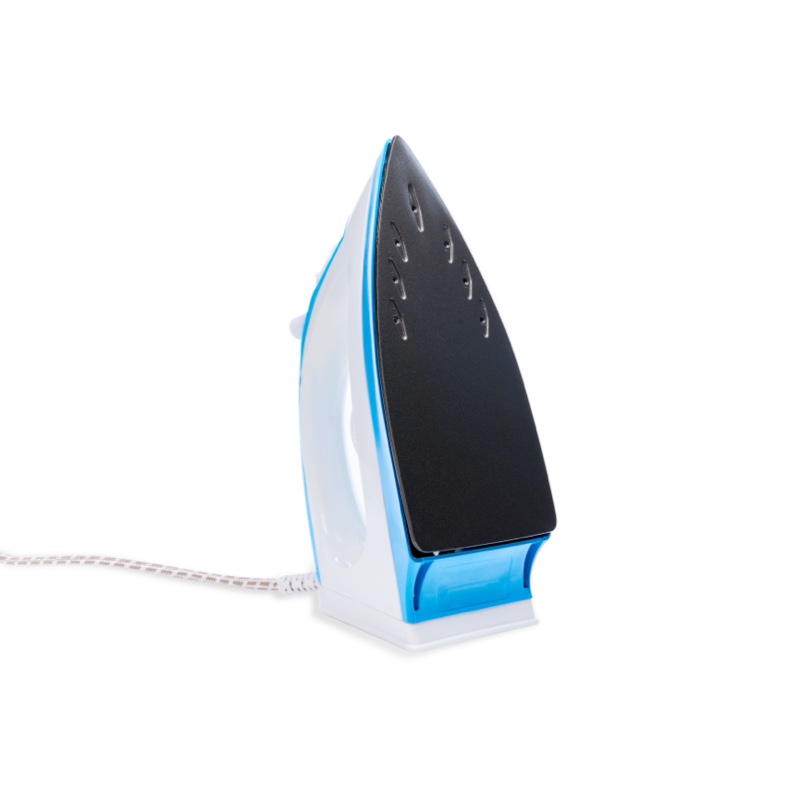
You must establish the optimal wattage carefully. A highly reliable compact steam iron must balance rapid heat-up times under 30 seconds. However, it absolutely cannot trip standard hotel room breakers. Most older properties cannot handle sudden 1500W spikes across multiple rooms simultaneously. Usually, selecting models running between 1000W and 1200W hits the perfect performance sweet spot. They heat quickly while maintaining electrical grid stability.
Let us address a very transparent industry assumption. A high-quality handheld cordless steam iron provides unmatched convenience for retail boutique shelves. Consumers love the freedom of untethered movement. However, current battery limitations often result in weaker steam output and noticeably shorter runtimes. Corded models remain the definitive gold standard for dependable, high-volume hotel room use. If your retail strategy demands cordless units, evaluate lithium-ion degradation timelines closely. Most commercial batteries degrade noticeably after 300 to 500 charge cycles.
Finding the precise capacity sweet spot requires testing. Usually, a reservoir holding 100ml to 150ml works best for institutional settings. It holds enough water to steam two full outfits per fill. Meanwhile, the device remains ergonomically friendly for wrist comfort. Smaller tanks also ensure housekeeping staff can drain them rapidly during daily room turnovers. A transparent tank design helps users monitor water levels instantly.
Guests will inevitably drop these appliances. You must pay strict attention to soleplate materials and overall build construction. Ceramic soleplates resist sticking and glide smoothly. Stainless steel options offer rugged, drop-resistant durability. The outer casing must utilize high-impact, heat-resistant plastics. Weak hinges or brittle water tank latches will break during the first month of commercial deployment.
Feature | Corded Steam Models | Cordless Steam Models |
|---|---|---|
Steam Pressure | High and continuous | Moderate, diminishes as battery drains |
Heat-Up Time | Under 30 seconds | 45 to 60 seconds |
Best Use Case | Hotel rooms, high-turnover settings | Travel retail, quick touch-ups |
Longevity | 5+ years with descaling | Battery limits lifespan (approx. 2-3 years) |
Never negotiate on baseline safety features. You must require dual-sensor auto-shutoff mechanisms. They trigger immediately when the unit sits inactive or when it completely runs out of water. Anti-drip mechanisms are equally vital. They prevent sudden boiling water spurts, effectively protecting guests from severe scalding. These features dramatically reduce property liability and ensure a stress-free user experience.
Global travel retail demands dual-voltage capabilities (110V/220V). Travelers expect their purchased devices to work seamlessly across continents. For institutional property procurement, strict adherence to regional certifications is entirely non-negotiable. Always demand verifiable UL, CE, and RoHS certifications from your manufacturing partners. Failing to secure these certifications exposes operations to massive compliance fines and safety hazards.
Most commercial properties deal with hard water constantly. This environmental reality leads to severe internal calcification. Always select appliances featuring built-in anti-calc filters. You must also establish rigorous housekeeping protocols. Periodic descaling routines prevent sudden appliance failure. Ignoring mineral buildup destroys internal heating elements rapidly.
Train housekeeping staff to empty water tanks completely during every checkout cleaning.
Run a mild white vinegar and water solution through the steamers quarterly to break down mineral deposits.
Never deploy 220V exclusive units into 110V regions without explicit internal voltage switching capabilities.
Sourcing a high-quality custom branding steam iron elevates your property's perceived value immensely. It transitions an everyday utilitarian appliance into a premium brand touchpoint. Travel boutiques use customized devices to enhance their retail shelves. Seeing a well-designed, custom-branded product reinforces brand loyalty every time the guest cares for their garments.
Vendors offer several specific customization tiers to match your operational strategy. Simple logo silk-screening works perfectly for tighter budgets. Custom pantone color-matching aligns the device's exterior with your exact corporate brand guidelines. Bespoke, heavy-stock packaging drives high-end boutique sales. Premium unboxing experiences encourage social media sharing, generating organic marketing value.
Let us analyze the sheer margin potential. Stocking branded, aesthetically pleasing compact steamers yields incredible returns for airport retailers and hotel boutiques. Display them prominently near checkout lanes. Position them within luxury luggage sections. They make excellent impulse purchases. Travelers frequently forget their garment care tools. Offering an attractive, branded solution solves their immediate problem while generating high-margin revenue.
Avoid compromising internal heating element quality merely to secure a lower per-unit cost. High defect rates quickly erode your initial savings. You will face mounting replacement shipments, constant housekeeping complaints, and negative guest reviews. Choose suppliers who demonstrate consistent quality control over cheap mass production. Reliability always yields a better long-term return.
Procurement teams must conduct rigorous physical tests before signing any contracts. Do not rely solely on printed specification sheets. Use the following structured methodology:
Fabric Penetration: Test steam penetration on heavy hotel cotton towels versus delicate synthetic blouses.
Speed Validation: Measure the actual cold-start heat-up time using a precise stopwatch versus the manufacturer’s optimistic claims.
Leakage Assessment: Conduct a physical tip-over test. Leave the heated, filled unit on its side on a dry surface to check for immediate water seal leakage.
Ergonomic Review: Have housekeeping staff hold the filled unit for five minutes to assess wrist fatigue.
Commercial bulk orders require crystal clear warranty terms. Look for vendors offering fast bulk-replacement policies. Accessible, responsive customer support ensures operational continuity when random units fail. Read the fine print carefully. Verify they cover commercial usage rather than just residential consumer applications. A strong warranty acts as an essential safety net for your procurement strategy.
Criteria | Acceptable Standard | Red Flag Warning |
|---|---|---|
Safety Certifications | UL, CE, RoHS visibly provided | Pending or missing certificates |
Defect Rate History | Under 2% per production batch | Frequent online reviews mentioning leaks |
Warranty Coverage | 1-2 years commercial coverage | Consumer-only warranty clauses |
Sample Turnaround | Delivered within 7-10 days | Evasive responses regarding physical samples |
The right garment care device effectively bridges a crucial industry gap. It perfectly balances guest convenience, delicate fabric safety, and long-term institutional reliability. Moving away from outdated ironing boards instantly upgrades the entire room experience. It saves space, minimizes severe burn liabilities, and empowers staff to operate efficiently.
Do not commit blindly to large-scale vendor agreements. Request detailed technical specifications and official compliance certificates immediately. Order physical samples to your corporate office. Conduct your own rigorous stress tests using our outlined methodology. Once you verify performance and safety, you can confidently proceed with a fleet-wide rollout or a profitable retail inventory purchase.
A: Yes, provided they reach specific temperature thresholds. Evidence shows steam must consistently exceed 120°F (49°C) to kill bed bugs and ambient bacteria effectively. High-quality steamers rapidly achieve and hold these temperatures. This capability makes them a practical, chemical-free sanitization tool for refreshing hotel upholstery, curtains, and bedding between guest stays.
A: A portable electric press relies on direct, heated-plate pressure to physically flatten wrinkles. This aggressive heat easily damages delicate silks and synthetics. A garment steamer uses moisture and gentle, directional heat to relax clothing fibers without direct compression. This fundamental difference makes the steamer significantly safer and more versatile for diverse guest wardrobes.
A: While distilled water definitely maximizes appliance longevity, practical hotel use means guests will inevitably use bathroom tap water. To mitigate this reality, operations teams must purchase anti-calc models. These specialized units feature built-in filters to handle mineral buildup. They ensure consistent steam performance despite exposure to hard tap water.
A: Expect a realistic timeline of 10 to 20 minutes of continuous steam output per full charge. Strict battery constraints limit prolonged, continuous use. This brief runtime explains why cordless models fit perfectly for quick retail travel use. Conversely, high-volume hotel environments still require the continuous, reliable power provided by traditional corded models.


