
- All
- Product Name
- Product Keyword
- Product Model
- Product Summary
- Product Description
- Multi Field Search
Views: 0 Author: Site Editor Publish Time: 2026-08-07 Origin: Site


Slow processing lines kill efficiency. Retail stores, busy hotels, and demanding households face this daily. Poor wrinkle removal creates major workflow bottlenecks. You can often trace these problems directly back to underpowered equipment. You need continuous, high-pressure steam. You also must avoid frustrating heat recovery lags. Properly sizing your equipment is the only way to match your actual processing volume. We will move past basic marketing claims. We will show you how to evaluate real wattage accurately. You will learn about crucial steam output metrics and various boiler types. We will also cover essential vendor compliance requirements. This ensures you find the perfect equipment fit for both professional and prosumer environments.
Consumers and professionals often misunderstand wattage ratings. Manufacturers frequently advertise massive numbers on their packaging. However, standard electrical circuits impose strict physical limits. You cannot run a 3000W appliance on a standard US 15-amp circuit. The absolute physical limit for a 120V outlet rests around 1800W. If an appliance draws more power, it will immediately trip the circuit breaker. Therefore, buyers must evaluate equipment based on realistic, regional voltage parameters. A genuine fast garment care high power steam iron optimizes power within these structural limits.
The heat-recovery cycle acts as the true engine of pressing efficiency. Wattage directly determines how fast an appliance reheats. Every time you release a burst of steam, water absorbs thermal energy. This process causes the soleplate temperature to drop. High-wattage heating elements restore this lost heat rapidly. Fast thermal recovery eliminates annoying waiting periods between presses. This continuous workflow is the primary driver of rapid garment processing.
You must also distinguish between fabric penetration and surface heat. Novice users often assume hotter soleplates yield better results. This assumption causes fabric damage and scorching. True wrinkle removal relies on steam pressure. Engineers measure this pressure in bars. High pressure forces vapor deep into dense fabric fibers. It relaxes threads from the inside out. This approach protects the fabric surface while delivering superior, crisp results.
You cannot properly size your equipment without analyzing key performance metrics. Continuous steam rate is arguably the most vital metric. We measure this rate in grams per minute (g/min). Heavy professional use requires a minimum threshold of 35 to 50 g/min. You must differentiate between this continuous output and localized "steam burst" numbers. A burst might hit 200 g/min for one second. However, a high continuous rate sustains your processing speed over an entire shift.
Soleplate materials significantly alter the user experience. Manufacturers generally offer three primary options. Each material possesses distinct thermal and physical characteristics. Understanding these differences helps you align high power steam iron specifications to your specific fabric needs.
| Material | Glide Coefficient | Heat Retention | Best Use Case |
|---|---|---|---|
| Stainless Steel | Moderate to High | Excellent | Heavy natural fibers, industrial pressing, high durability needs. |
| Ceramic Coating | Very High | Good | Synthetics, delicate fabrics, static-prone garments. |
| Anodized Aluminum | Moderate | Outstanding | Rapid heat adjustments, heavy-duty commercial environments. |
Steam hole distribution also dictates performance. Budget models scatter holes randomly across the soleplate base. Professional units concentrate micro-holes near the front tip. This specific geometry directs powerful steam into tight corners. It gives operators ultimate precision. You need this targeted vapor for complex collars, pleats, and cuffs.
Boiler architecture fundamentally changes how the equipment operates. Traditional integrated tanks keep the entire water supply above the soleplate. This design offers excellent localized mobility. You can move freely around a small room. Conversely, pressurized steam generators separate the boiler from the handpiece. The base station boils the water and pumps vapor through a hose. This architecture supports sustained, high-volume pressing. It holds massive amounts of water safely away from the operator's hands.
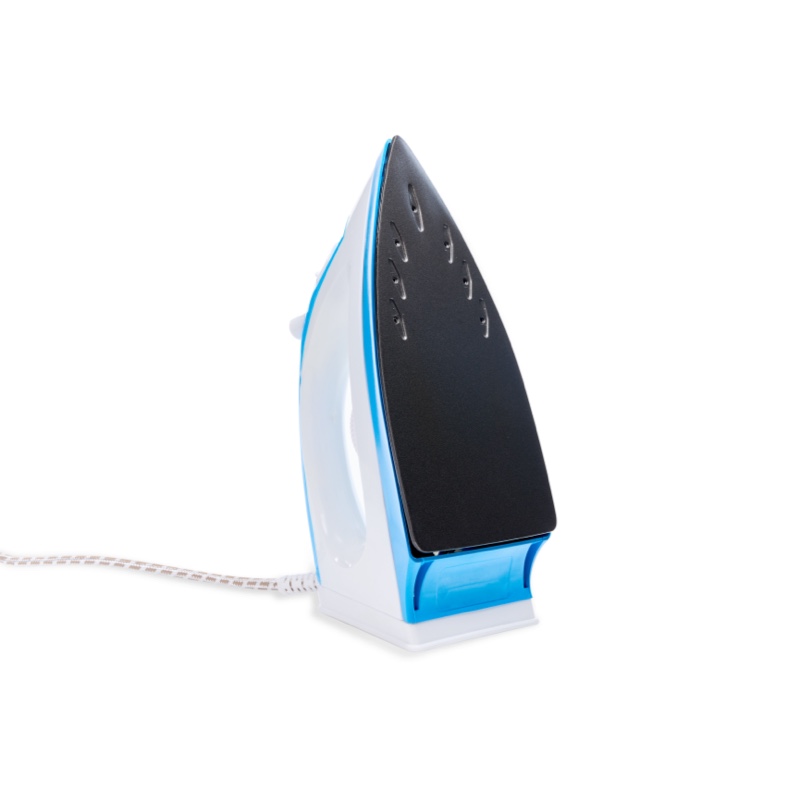
Finding the right high power steam iron means matching hardware to human operators. You must assess your daily volume first. A small boutique processing ten shirts an hour requires different tools than a busy hotel laundry. You need a simple framework to match water capacity to your output.
The hand-fatigue factor ruins productivity in commercial settings. Large internal tanks add excessive weight to the wrist. Operators lifting a heavy appliance hundreds of times a day risk repetitive strain injuries. You must mitigate these physical risks to maintain efficiency.
Gravity-feed models and separate boiler stations provide a highly scalable alternative. A gravity-feed system suspends a large water bottle above the workstation. Water flows down a tube into the heated soleplate. This keeps the handpiece incredibly light. Separate boiler stations achieve a similar ergonomic benefit. The heavy water tank sits securely on the table. The operator only lifts the lightweight heated soleplate and hose.
Workspace setup dictates your cord and hose requirements. Short cords cause frustration. They force operators into awkward postures. You need pivot cords to prevent tangling during rapid movements. If you use a separate boiler, evaluate the hose length carefully. A longer hose offers flexibility but risks thermal drop before the vapor reaches the fabric. High-quality commercial units use thermal shielding over the hose. This shielding protects the operator from burns and maintains internal vapor pressure.
Off-the-shelf models eventually fail under highly specialized conditions. Industrial laundries and high-end fashion boutiques often encounter strict limits. Standard equipment cannot handle extreme fabric variations easily. Heavy denim requires aggressive heat and immense pressure. Delicate silks demand hyper-specific, low-temperature vapor curves. If your workflow involves exotic or difficult textiles, you need a custom high power steam iron to prevent catastrophic garment damage.
Customization allows operators to build an optimal pressing station. You can modify core components to suit your exact daily demands. These modifications improve both safety and output quality. Consider these common customizable components for professional setups:
Custom specifications also address precise environmental factors. High-altitude locations experience different boiling points. A custom manufacturer can adjust the internal thermostats accordingly. This precise calibration guarantees reliable performance regardless of external variables. The initial effort required to source custom specifications pays off through flawless daily execution.
Sourcing commercial equipment demands extreme diligence. You are introducing high-draw, heat-generating appliances into your facility. Safety and compliance verification must sit at the top of your priority list. Uncertified equipment poses severe fire and electrical hazards. You must demand strict adherence to international safety standards.
Look for recognizable marks like UL, ETL, or CE. These certifications prove the equipment passed rigorous electrical testing. Insurance companies often reject claims if fires originate from uncertified appliances. A reputable high power steam iron supplier will gladly provide their compliance documentation upfront.
After-sales support determines the lifespan of your investment. Commercial environments punish equipment daily. Calcium buildup eventually chokes even the most robust boilers. You must evaluate suppliers based on their descaling serviceability and maintenance protocols. Ask specific questions before purchasing. Do they stock replacement gaskets? Can you easily order replacement hoses or soleplates? A supplier who fails to provide basic maintenance parts will leave your workflow stranded.
Purchasing managers must also clarify MOQ (Minimum Order Quantity) and B2B terms. Equipping multiple retail locations or hospitality floors requires standardization. You want identical equipment across all sites. This standardization simplifies staff training and maintenance. Shortlist suppliers who offer favorable bulk terms but also accommodate phased rollouts. Ensure they guarantee model availability for several years. This prevents mixed-model chaos when you need to replace a single unit down the road.
Proper equipment sizing transforms chaotic garment care into a streamlined process. You must base your purchase path on concrete data. Audit your electrical capacity first to avoid blown fuses. Define your exact hourly garment volume. Align your continuous steam specifications to match that heavy demand. Always prioritize ergonomics to protect your operators from hand fatigue.
Stop relying on flashy packaging numbers. Your immediate next step involves measuring your current daily processing volume. Check your facility’s electrical circuits to confirm your true amperage limits. Only after completing this physical audit should you request quotes or place an order. Accurate preparation ensures you install an appliance capable of handling your toughest workflow.
A: A true high-power model requires at least 1500W to 1800W on standard 120V circuits. For commercial settings utilizing 220V/240V, the baseline jumps to 2400W or higher. This wattage guarantees rapid thermal recovery.
A: No. A temporary burst helps with a stubborn crease, but continuous output (measured in g/min) matters more. Sustained continuous steam maintains your processing speed across multiple garments without forcing you to wait for reheat cycles.
A: Maintenance depends entirely on your usage hours and local water hardness. Heavy commercial users in hard water areas may need weekly descaling. Always look for equipment featuring built-in anti-calc systems to reduce this maintenance burden.
A: Yes, for high-volume needs. Steam generators deliver much higher pressure (measured in bars). They also move the heavy water tank off the handpiece. This weight distribution drastically reduces wrist fatigue during long shifts.


