
- All
- Product Name
- Product Keyword
- Product Model
- Product Summary
- Product Description
- Multi Field Search
Views: 0 Author: Site Editor Publish Time: 2026-09-22 Origin: Site


Integrating garment care into heavily constrained spaces presents a unique design challenge. You see this issue frequently in RVs, tiny homes, boutique hotel rooms, and custom minimalist closets. We must move beyond basic standalone usage. Users demand a permanent, safe, and highly accessible setup. Designers cannot sacrifice valuable square footage to achieve this convenience.
You need a reliable storage solution. It requires careful evaluation of technical specifications, safety protocols, and space design. You also need solid supplier sourcing for a flawless implementation. Building a hidden ironing station is not as simple as placing a device in a drawer. Heat, moisture, and electrical loads create complex engineering hurdles.
This guide breaks down exactly how to plan these integrations. You will learn to evaluate dimensional tolerances and manage residual heat safely. We also explore material selection for custom cabinetry. Finally, you will discover how to vet vendors to ensure long-term operational success.
Designing a hidden garment care station starts with defining clear business problems. We aim to maximize user convenience. Guests or residents expect immediate accessibility. However, you must simultaneously minimize visual clutter. You also have to eliminate fire and moisture hazards in tight spaces.
Evaluating usage frequency helps determine the appropriate setup friction. Ask yourself how often the user interacts with the appliance. High-frequency environments demand a permanent pull-out station. Housekeeping staff in hotels benefit from zero-friction access. Conversely, low-frequency environments tolerate a dedicated stow-away compartment. An occasional traveler in a custom RV might accept pulling the unit out of a latched bin.
You must establish core metrics to evaluate any proposed design. These metrics act as your baseline for approving a blueprint.
A successful installation balances these three metrics seamlessly. You provide a flawless user experience while protecting the surrounding architectural materials.
Appliance geometry dictates your entire cabinetry design. You must prioritize specific form factors. Look for foldable handles and retractable cords. Detachable water tanks also help minimize the overall storage footprint. These mechanical features reduce the required depth of your compartments.
Establishing strict dimensional tolerances is critical. You must define the maximum width, height, and depth requirements for the target compartment early. Always add a 15% buffer to the manufacturer dimensions. This buffer accounts for manufacturing variances and user error during storage. A tight fit often leads to scratched soleplates or damaged cabinetry.
Weight ratios play a significant role in hardware selection. You must factor in the device's dry weight plus a full water tank. Use this combined weight when specifying drawer slides or wall-bracket load capacities. Under-specifying hardware leads to sagging drawers over time.
Power requirements present another major constraint. You must match the iron’s wattage to the designated electrical circuit. Compact living environments often feature shared breakers. A high-wattage appliance trips breakers easily if operated alongside a hairdryer or microwave. Select units drawing appropriate amperage for the specific zone.
Specification Tolerances for Enclosed Storage
| Design Parameter | Standard Appliance | Compact Target Spec | Architectural Impact |
|---|---|---|---|
| Handle Design | Fixed ergonomic grip | 180-degree folding handle | Reduces vertical clearance by 40% |
| Cord Storage | External wrap | Internal spring-retractable | Prevents track jamming in drawers |
| Heat Dissipation | Slow ambient cooling | Rapid-cool soleplate tech | Requires less thermal shielding |
| Water Tank | Integrated 300ml | Detachable 150ml | Lowers overall storage weight limits |
Always request detailed engineering drawings before finalizing your cabinetry. The dimensions printed on consumer retail boxes often ignore cord protrusions. You need the exact physical footprint to guarantee a safe and functional fit.
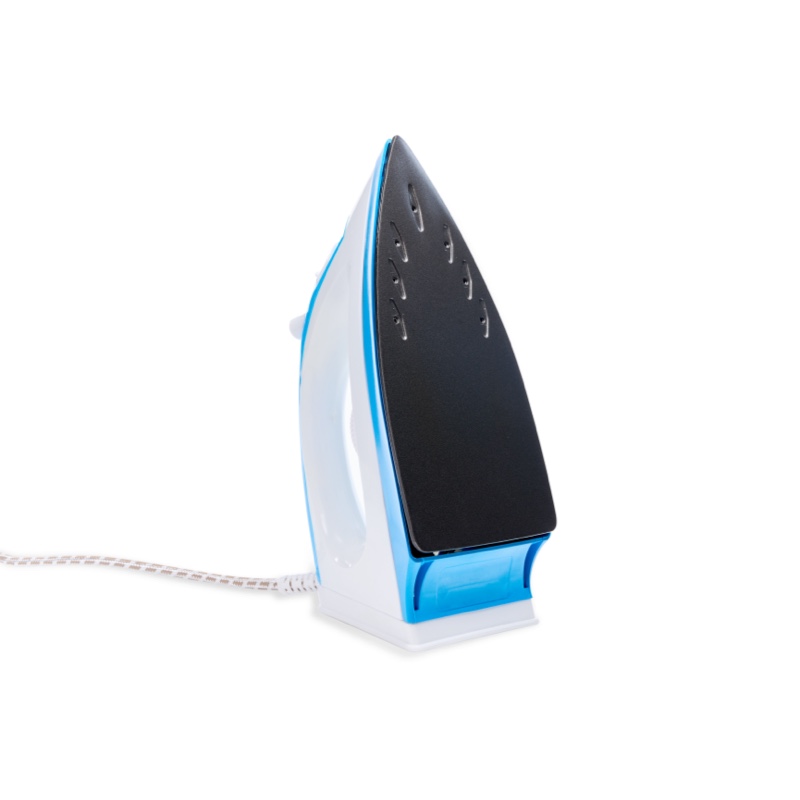
Designing the physical storage space requires selecting an appropriate architectural approach. Each method offers distinct advantages depending on the available square footage. You must evaluate the room layout before committing to a specific build.
Material selection defines the safety and longevity of your chosen approach. You cannot use standard residential drywall or untreated MDF near hot appliances.
Specify high-density silicone mats for the resting base. Use aluminum heat shields on the upper and side interior walls. The radiant heat off a cooling soleplate damages adjacent surfaces quickly. Finally, insist on moisture-resistant MDF or marine-grade plywood for the surrounding box. Trapped steam causes standard particleboard to swell and fail within months.
Safety remains the absolute highest priority when concealing appliances. The cooling period vulnerability creates the largest risk profile. Users routinely finish ironing and immediately shove the device into a closed drawer. The soleplate remains dangerously hot. This behavior creates a severe fire hazard inside confined wooden spaces.
You must engineer active mitigation tactics. Install passive ventilation grilles in the storage compartment. These grilles allow hot air to escape naturally through convection. Couple this ventilation with high-grade thermal shielding. A layer of non-combustible material protects the structural wood from direct contact.
Residual moisture introduces long-term deterioration risks. A recently used portable steam iron continues to off-gas steam as it cools. You must plan for tank drainage and steam dissipation. Unventilated drawers trap this moisture easily. The trapped humidity causes rapid mold growth and delamination of cabinet veneers. Educate users to empty the tank, but design the space assuming they will forget.
Electrical compliance requires rigorous attention. Ensure the designated storage location adheres strictly to local fire codes regarding heat-generating appliances. Never route extension cords through cabinetry to power the device. Install a dedicated, hardwired receptacle inside the compartment. Use appropriate wire gauges to handle the peak heating load.
Best practices for safety integration:
Off-the-shelf consumer appliances often fail in commercial or specialized deployments. You must determine when standard retail units no longer meet your engineering requirements. Investing in customized manufacturing solves complex integration problems effectively.
Volume rollouts in hospitality or RV fleets justify custom engineering. You can collaborate directly with manufacturers for bespoke features. For instance, you might request auto-shutoff timers calibrated specifically for hotel use. You can also specify hardwired anti-theft tethers. These tethers prevent guests from removing the unit from the room. The initial tooling cost pays off through reduced replacement rates.
Aesthetic and ergonomic alignment drives custom investments in luxury markets. High-end boutique hotels demand cohesive interior design. You can specify proprietary colorways to match the room decor perfectly. You might also select upgraded materials or customized soleplates that glide effortlessly over specific uniform fabrics.
Voltage and plug customization remains crucial for international rollouts or mobile living. Regional grid standards vary wildly. You must ensure compatibility with European 220V systems or North American 110V systems. Furthermore, specialized low-voltage off-grid systems in modern RVs require unique power curves. A custom firmware flash ensures the heating element does not drain the solar battery bank too rapidly.
Procuring commercial-grade appliances requires a stringent vetting process. You cannot rely on consumer reviews. You need a partner capable of supporting enterprise-level integrations.
Demand absolute technical transparency early in the conversation. Request accurate CAD files immediately. You need these files to model the cabinetry precisely. Ask for detailed cooling curve data. This data proves how fast the soleplate temperature drops in an enclosed space. Do not proceed without verifiable specifications.
Regulatory compliance is non-negotiable. Reject vendors that cannot produce authentic safety certifications. You need verifiable UL, CE, or ETL marks. Custom builders face massive liability if an uncertified appliance causes a fire. Request the actual certification certificates, not just a logo on a website.
Evaluate the supply chain reliability rigorously. Assess their capacity for consistent inventory over a multi-year rollout. Check their spare parts availability. Replacement water tanks and power cords break frequently in commercial settings. You need guaranteed access to these parts. Clarify their minimum order quantities (MOQs) to ensure they align with your project phases.
Your next-step action involves empirical testing. Request physical samples from your shortlisted candidates. Conduct thermal testing within your intended mock-up storage environment. Place the hot unit in the sample drawer and measure the ambient temperature rise. This physical validation prevents expensive redesigns later.
Effective installation merges appliance specifications with rigorous spatial and thermal planning. You cannot treat a concealed garment care station as a simple storage box. It requires precise engineering to handle heat, moisture, and electricity safely.
We strongly recommend prioritizing safety and ventilation over extreme space-saving measures. A slightly larger compartment with proper airflow prevents disastrous fire hazards. Always validate your setup with a physical prototype before moving into the final build-out phase.
Contact our enterprise sales team today to request detailed spec sheets. We can consult on bulk sourcing and custom modifications for your specific storage project.
A: Allow at least 2 inches of clearance on all sides. You must ensure the surface is lined with a heat-resistant material. Silicone or aluminum shields work best to safely dissipate residual heat.
A: No. Even a compact appliance requires 10–15 minutes of ambient cooling before being placed into an enclosed space. The only exception is if the compartment is engineered with active ventilation and industrial thermal shielding.
A: Prioritize suppliers that provide detailed technical documentation and CAD files. Require independent safety certifications like UL or CE. Look for scalable fulfillment and options for customizing power delivery or mounting hardware.
A: Yes. Emptying the tank prevents slow leaks and internal calcification. It also prevents moisture buildup inside enclosed cabinetry, which quickly leads to mold growth and material degradation over time.


