
- All
- Product Name
- Product Keyword
- Product Model
- Product Summary
- Product Description
- Multi Field Search
Views: 0 Author: Site Editor Publish Time: 2026-08-21 Origin: Site


Consumer expectations for garment care have dramatically shifted over the past few years. Buyers no longer want basic functionality. They demand high efficiency, uncompromising safety, and superior fabric protection. Retail buyers and category managers constantly face mounting pressure. You need to rationalize SKUs and optimize profit margins. Simultaneously, you must minimize high return rates caused by poor product performance. Issues like fabric snagging and soleplate burning ruin customer trust.
Integrating a high-quality non stick steam iron directly addresses these common consumer friction points. Upgrading your appliance portfolio offers scalable margin opportunities. These benefits apply equally to private label and established brand-name programs. You can improve user satisfaction while protecting your bottom line. We will explore how modern soleplate technology drives retail velocity. You will learn to navigate essential safety compliance trends. Finally, we will detail how to select reliable manufacturing partners for your upcoming merchandising strategies.
Consumer preferences heavily dictate modern retail success. Macro market data indicates a sustained shift toward hybrid functionality in garment care. Shoppers consistently choose appliances combining robust steam generation and friction-free gliding surfaces. Traditional dry irons are rapidly losing market share. They require excessive manual effort. They also pose a higher risk of scorching delicate fabrics. Upgrading shelf space to feature advanced soleplate technologies captures this shifting demand.
Understanding the connection between product features and retail outcomes is critical. You must map consumer benefits directly to your business goals. This alignment ensures stronger sales velocity.
Sourcing tiered models provides excellent profit margin implications. Commoditized baseline irons offer razor-thin margins. Shoppers often buy them purely on price. Conversely, coated steam variants command higher retail prices. Consumers willingly pay a premium for convenience and safety. You can implement healthy markups across your entire category. This strategy transforms a stagnant aisle into a highly profitable segment.
Best Practice: Always align your in-store displays to highlight the glide factor. Physical touchpoints matter. Allow shoppers to feel the soleplate texture through open-box displays. This tactile experience drives conversion rates.
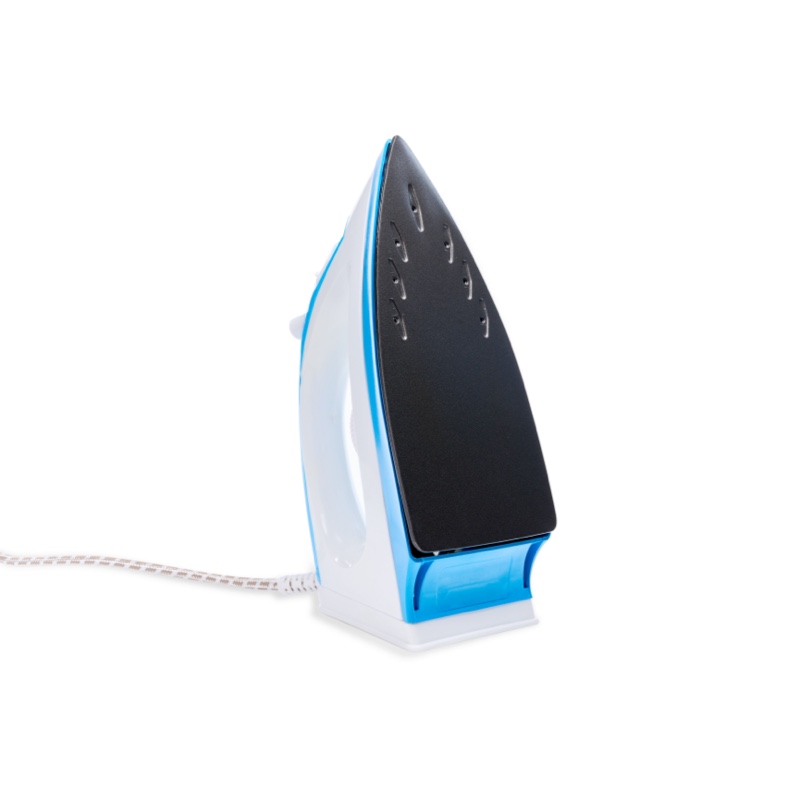
Shoppers today scrutinize household appliances more than ever before. We are witnessing a massive shift regarding chemical toxicity. Consumers exhibit growing skepticism toward traditional chemical coatings. Historically, many manufacturers relied heavily on standard PTFE or Teflon-style finishes. While effective for gliding, these materials often raise health concerns when overheated. The demand for non-toxic, eco-friendly household appliances is surging.
You must address the PFAS-free movement proactively. Per- and polyfluoroalkyl substances (PFAS) face strict regulatory scrutiny globally. Retailers ignoring this trend risk alienating health-conscious buyers. Embracing safe material alternatives is no longer optional. It is a mandatory merchandising strategy.
Evaluate alternative materials carefully. Ceramic coatings provide a fantastic, safe option. They offer incredible heat retention. They also boast natural non-stick properties without harmful chemical off-gassing. Advanced anodized aluminum represents another excellent choice. The anodization process硬ens the metal surface naturally. It creates a smooth, durable finish resistant to flaking. Both alternatives perform beautifully while satisfying consumer safety demands.
Risk mitigation is vital for large-scale retailers. Proactive compliance protects your brand reputation. Sourcing products meeting stringent health and environmental standards prevents disastrous scenarios. A single product recall destroys consumer trust and incurs massive logistical costs. You avoid these pitfalls by prioritizing certified, non-toxic materials from day one.
Common Mistake: Do not assume all "ceramic" labels mean 100% toxin-free. Always demand comprehensive material safety data sheets from your manufacturing partners. Verify the exact composition of the soleplate before approving the SKU.
Category managers must balance performance metrics against target retail prices. Optimizing non stick steam iron specifications ensures your lineup hits the right consumer notes. You need distinct variations for entry-level, mid-tier, and premium buyers. Thoroughly evaluating component quality drives this segmentation.
Soleplate durability and composition deserve strict attention. You must evaluate scratch resistance carefully. A scratched coating ruins the ironing experience. It catches on fabrics and degrades heat distribution. Heat distribution parity is equally critical. The soleplate must heat uniformly from tip to heel. Cold spots cause inconsistent steaming, while hot spots burn clothes.
Steam output and heat metrics define the user experience. You must baseline acceptable wattage for your target audience. A 1200W model suits budget-conscious college students. However, premium buyers expect 1800W or higher for rapid heating. Continuous steam rates and burst capabilities dictate performance. Measured in grams per minute (g/min), higher outputs relax stubborn wrinkles faster.
Lifecycle features dramatically lower warranty claim frequencies. Modern consumers expect appliances to last. Integrating specific protective mechanisms extends product lifespan.
Finding the cost versus spec balance requires discipline. Over-speccing a budget model erodes your margins quickly. You must identify the "good-enough" threshold for mass-market buyers. Reserve expensive digital displays and massive steam bursts for your flagship models.
Below is a comparative breakdown of recommended tiered specifications for retail planning.
| Retail Tier | Target Wattage | Soleplate Material | Steam Output (g/min) | Required Lifecycle Features |
|---|---|---|---|---|
| Entry-Level | 1000W - 1200W | Basic Ceramic / Coated Aluminum | 15 - 20 g/min | Auto-Shutoff |
| Mid-Tier | 1400W - 1600W | Advanced Ceramic / Anodized | 25 - 35 g/min | Auto-Shutoff, Anti-Drip |
| Premium | 1800W+ | Multi-Layered Ceramic / Titanium | 40+ g/min (Burst 100g+) | Auto-Shutoff, Anti-Drip, Anti-Calc |
Private label programs offer the highest margin potential in the appliance category. Developing a custom non stick steam iron allows you to control the brand narrative. You bypass the margin constraints of reselling established national brands. True SKU differentiation requires more than slapping a logo on a generic mold. It requires thoughtful aesthetic and functional customization.
Aesthetic customizations align the appliance with your existing in-house brand identity. Exact Pantone color matching ensures visual consistency across your product lines. Ergonomic handle textures enhance perceived value. A soft-touch rubberized grip feels significantly more premium than hard, glossy plastic. These small tactile improvements heavily influence purchasing decisions on the retail floor.
Strategically building a "Good, Better, Best" lineup captures a wider customer base. You achieve this through tiered feature integration.
Packaging and shelf-presence finalize the conversion. Custom packaging must clearly communicate specific benefits to the shopper. Highlight safety credentials prominently. Use callout graphics for "PFAS-Free" or "Scratch-Resistant Ceramic." Show visually engaging icons for steam burst metrics. Clean, informative packaging builds immediate trust and reduces reliance on store associates for explanations.
Best Practice: Eco-friendly packaging is increasingly important. Use recycled cardboard and eliminate single-use plastic wraps inside the box. This aligns perfectly with the non-toxic messaging of the appliance itself.
Your merchandising strategy is only as strong as your manufacturing partner. When integrating appliances into retail programs non stick steam iron inventory, risk management is paramount. You need factories capable of scaling production without sacrificing quality. Finding a capable non stick steam iron supplier requires rigorous vetting across multiple operational disciplines.
Begin by assessing raw manufacturing capabilities. Production capacity dictates their ability to handle peak seasonal orders. Automation levels directly influence unit consistency. Highly automated assembly lines produce fewer variations between batches. You must request historical defect rates. Factories tracking and openly sharing their defect data demonstrate mature quality control cultures.
Verifying mandatory certifications and compliance ensures legal fitness for your target markets. Never take a factory's word on safety. Demand valid, verifiable documentation. North American markets require UL or ETL listings. European markets mandate CE and RoHS compliance. Furthermore, look for ISO9001 certification. This indicates the factory maintains a standardized, internationally recognized quality management system.
Evaluating supply chain resilience protects your inventory flow. Ask detailed questions about raw material sourcing stability. Does the factory rely on single-source providers for their ceramic coatings? If so, your supply chain is vulnerable. Evaluate standard lead times accurately. Understand their Minimum Order Quantities (MOQs). High MOQs tie up cash flow, while low MOQs might indicate a lack of large-scale manufacturing infrastructure.
Rollout lessons from veteran buyers emphasize caution. Never skip a phased pilot program. Order a limited production run first. Test these units extensively before full retail deployment. Rigorous third-party QA/QC inspections are absolutely mandatory. Hire independent inspection agencies to check the goods before they leave the factory floor. They should perform drop tests, heat distribution analyses, and cord strain relief checks.
Common Mistake: Approving production based solely on a "golden sample." The handmade prototype always looks perfect. You must inspect units pulled randomly from the actual mass production line.
A well-specced, modern appliance is not just a basic consumer convenience. It represents a strategic retail asset designed for margin protection and long-term brand trust. By transitioning away from outdated technologies, you eliminate prevalent customer pain points. You reduce return rates and elevate the overall shopping experience. Navigating safety trends effectively ensures your offerings remain compliant and highly desirable.
Buyers must prioritize supply partners carefully. Shortlist manufacturers who offer totally transparent specification sheets. Look for partners providing customizable, safety-compliant coatings. Scalable production capacity guarantees you never miss a seasonal sales spike. A rigorous vetting process separates dependable partners from risky vendors.
Take immediate action to upgrade your category. Instruct your procurement teams to request physical sample units today. Demand current material safety data sheets (MSDS) to verify non-toxic claims. Collect all relevant compliance certificates for preliminary evaluation. Proactive sourcing now secures a more profitable appliance category for the upcoming fiscal year.
A: Entry-level models should feature a baseline wattage of 1000W to 1200W. Acceptable coatings include basic ceramic or non-toxic PTFE alternatives. Essential safety features are mandatory; auto-shutoff mechanisms must be included to prevent fire hazards. Continuous steam output should hover around 15-20 g/min to handle basic household fabrics effectively.
A: Ceramic soleplates generally offer superior scratch resistance compared to traditional PTFE coatings. They resist flaking over time, maintaining a smoother glide. Ceramic also provides excellent heat retention and distribution. From a consumer health perspective, ceramic is widely perceived as a safer, non-toxic alternative, free from harmful chemical off-gassing when exposed to high heat.
A: Rolling out a custom SKU typically takes 90 to 120 days. Tooling and aesthetic customizations require 30 to 45 days. Mandatory safety testing and certification approvals add another 30 days. Mass production generally takes 30 days, followed by freight transit times. Expediting steps often risks quality control failures.
A: A reliable supplier reduces return rates through rigorous factory QA/QC. Specifically, testing soleplate adhesion prevents peeling coatings. Testing anti-drip mechanisms ensures the appliance won't leak water onto delicate garments. When a supplier catches these functional defects before shipping, end-users receive flawless products, significantly lowering retail returns and customer complaints.


