
- All
- Product Name
- Product Keyword
- Product Model
- Product Summary
- Product Description
- Multi Field Search
Views: 0 Author: Site Editor Publish Time: 2026-09-18 Origin: Site


The soleplate serves as the absolute critical point of failure or success in ironing. It strictly dictates heat transfer efficiency. It determines glide friction. It guarantees garment safety. Buyers often feel overwhelmed by marketing jargon. You see endless promotional comparisons evaluating ceramic, stainless steel, and Teflon. A poor choice leads directly to snagged fabrics. You might experience highly uneven pressing. Rough materials cause rapid degradation of the appliance itself. This guide breaks down the complex material science behind ceramic coatings. We provide objective performance benchmarks to clarify your options. We detail strict criteria for evaluating technical parameters. You will learn exactly how to vet manufacturers thoroughly. We cover everything from core density to steam architecture. These practical insights will help you finalize your purchasing decision confidently.
Most consumers misunderstand ceramic soles completely. You rarely buy a solid ceramic block. The term acts somewhat as a commercial misnomer. A premium ceramic soleplate steam iron utilizes a highly engineered composite architecture. It requires a robust heat-conductive core. Manufacturers normally use aluminum to ensure rapid thermal response. They sometimes use steel to provide superior thermal retention. Engineers then fuse a silicate-based ceramic finish directly over this metal base. They bake this outer layer at extreme temperatures to solidify the bond.
This composite construction creates a very specific material trade-off. We see exceptional non-stick properties across various fabrics. You get practically zero static buildup during operation. This anti-static feature remains absolutely crucial when you press synthetic blends. The baked ceramic finish delivers a noticeably superior glide coefficient compared to raw, unpolished metals. It allows the iron to float across garments effortlessly.
However, buyers must acknowledge the physical risks. The ceramic coating remains inherently susceptible to micro-chipping. Dropping the appliance causes permanent structural damage to the surface. Aggressively scraping the plate against metal zippers ruins the smooth finish instantly. This surface fragility heavily emphasizes your need for high-grade manufacturing standards. Cheap manufacturing leads to rapid surface flaking. You must invest in carefully engineered bonding processes to ensure longevity.
You need a comparative evaluation framework to make informed decisions. We structure this section to highlight actual performance differences rather than simple feature lists. Understanding these material dynamics prevents costly purchasing mistakes.
Stainless steel absorbs heat slowly but holds it significantly longer. However, ceramic eliminates "hot spots" entirely. It distributes heat evenly and rapidly across the entire plate surface. This perfectly even distribution prevents accidental scorch marks on delicate fabrics. When we compare ceramic to Teflon (PTFE), ceramic easily wins in high-heat scenarios. Ceramic withstands maximum temperature thresholds safely. It never degrades or emits harmful chemical odors. This high-heat stability makes it vastly superior for pressing heavy cottons and dense linens.
You must assess how the surface interacts across different demanding textiles. Ceramic actively prevents synthetic fibers from melting. Bare metal often transfers intense heat instantly, causing this exact melting problem. The silicate surface glides incredibly smoothly over heavily starched fabrics. It never drags, catches, or bunches the underlying material. You save significant physical effort during long ironing sessions.
Starch buildup represents a frustrating daily reality. Ceramic requires specific, gentle maintenance routines to preserve its slickness. You must follow strict cleaning protocols.
Conversely, stainless steel handles aggressive, abrasive cleaning easily. You must weigh superior glide performance against this specialized cleaning requirement.
Table: Soleplate Material Comparison Matrix
| Performance Feature | Ceramic Coating | Stainless Steel | Teflon (PTFE) |
|---|---|---|---|
| Glide Friction Coefficient | Extremely Low (Smoothest) | Moderate (Can drag) | Low |
| Heat Distribution | Highly Even (No hot spots) | Prone to hot spots | Even |
| Maximum Temp Stability | Excellent | Excellent | Poor (Degrades at high heat) |
| Scratch Resistance | Vulnerable to micro-chips | Highly Durable | Highly vulnerable to scratching |
| Static Elimination | Superior (Zero static) | Poor (Builds static) | Moderate |
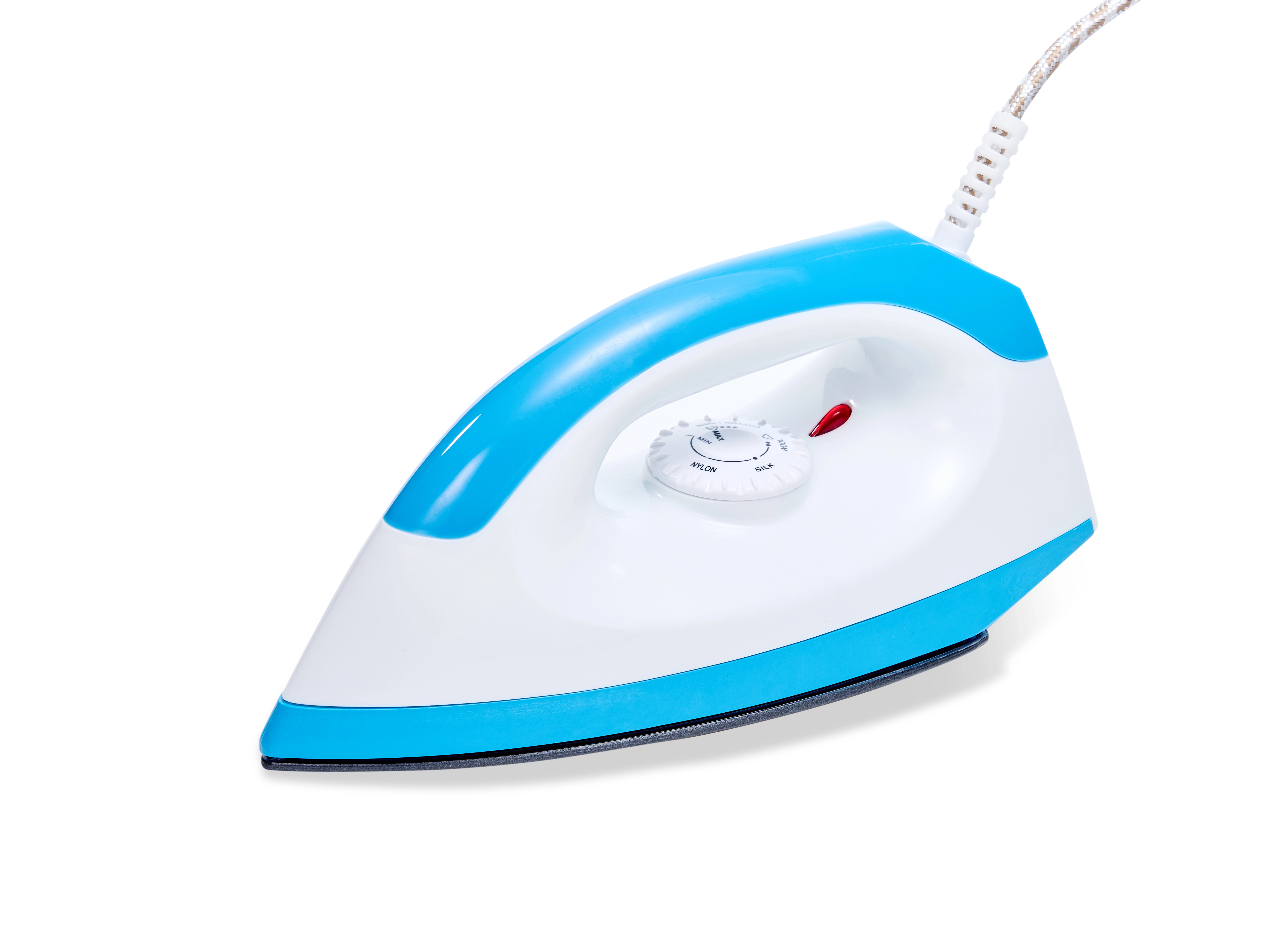
Technical parameters dictate real-world ironing performance. Evaluating exact ceramic soleplate steam iron specifications requires looking far past basic wattage numbers. You must analyze the engineering data critically.
Thin, sprayed-on ceramic degrades rapidly under normal use. These cheap coatings peel away within months. You must look for anodized layers instead. Baked-on ceramic finishes offer vastly superior molecular bonding. Check the technical spec sheet specifically for these exact bonding terms. Thicker ceramic applications resist thermal expansion stress much better. They protect the underlying metal core effectively.
Ceramic material allows engineers to drill precision micro-holes cleanly. You must evaluate the active steam vents carefully. Look closely at the ratio of active vents at the tip versus the center. Tip vents handle tight collars and complex seams perfectly. Center vents provide the massive moisture volume necessary for bulk steaming. The venting architecture directly defines how effectively the steam iron penetrates dense fabric structures.
Quality garment pressing requires adequate physical mass. You should never apply extreme manual downward force to remove wrinkles. Evaluate the exact weight of the core metal positioned beneath the ceramic shell. A denser core retains thermal momentum better. It presses heavy fabrics naturally through simple gravity. The ceramic layer then ensures this heavy mass glides without causing wrist fatigue.
Buyers often ask, what is a large ceramic soleplate steam iron for exactly? The true answer lies in high-volume professional applications. Standard retail models simply fail under commercial workloads.
Professionals strongly prefer large-format ceramic plates for continuous operation. Busy sewing rooms rely on them daily to press endless yards of fabric. Boutique hotels use them exclusively for crisp guest linens. Commercial dry cleaners depend on their consistent, even heat. These environments require industrial-grade reliability. The oversized ceramic plate handles massive workloads seamlessly.
A larger soleplate reduces your total pass-counts significantly. You cover broad textiles much faster. This efficiency applies perfectly to large drapes, wide quilting yardage, and expansive table linens. The slick ceramic material simultaneously mitigates user fatigue. You expend significantly less energy pushing a heavier appliance. The low-friction surface compensates for the increased weight beautifully.
You face a necessary design trade-off here. We can break this complex balance down into four core engineering requirements:
Large plates lacking properly tapered tips become entirely useless for detailed garment finishing. You need both massive coverage and pinpoint accuracy.
B2B buyers, regional distributors, and rigorous prosumers must vet their manufacturing sources carefully. A credible ceramic soleplate steam iron supplier strictly adheres to demanding industrial standards. You cannot afford to purchase untested equipment.
Demand total transparency regarding international compliance. Request their RoHS certification to ensure no hazardous materials exist in the ceramic mix. Demand their internal thermal shock testing data. Thermal shock tests involve heating the plate to extreme temperatures, then cooling it rapidly. These tests prove the ceramic coating remains structurally stable. The bonded layer must never flake, crack, or peel under rapid temperature cycles.
You must secure incredibly clear policies regarding soleplate delamination. Delamination occurs when the ceramic separates entirely from the metal core. The warranty framework should explicitly cover these specific bonding failures. It must also cover internal heating element failures. Reliable manufacturers confidently stand behind their complex bonding processes. They usually offer robust Acceptable Quality Limit (AQL) inspection reports.
Bulk buyers should heavily assess the manufacturer's engineering flexibility. Can they actively adjust the aluminum-to-ceramic ratio? You might require completely different ratios based on target market price points. Adjustments also cater to specific regional performance expectations. Strong suppliers offer rapid prototyping. They adapt the steam hole architecture to meet your precise specifications.
A high-quality ceramic soleplate represents the optimal choice for demanding users. It heavily benefits anyone prioritizing smooth glide, ultimate fabric safety, and perfectly even heat distribution. You must, however, invest strategically in a well-manufactured model. Cheaply bonded coatings will fail, flake, and ruin garments quickly.
Before purchasing, carefully review your specific daily fabric workloads. Determine whether you press primarily delicate synthetics or heavy, stubborn natural fibers. Cross-reference the detailed specifications outlined above. Always demand manufacturing transparency before engaging any bulk supplier. Use these strict technical parameters to finalize your retail or commercial purchase with total confidence.
A: Ceramic strongly resists standard fabric friction and general wear. However, it remains highly vulnerable to sharp metal objects. Exposed zippers, heavy rivets, or metal buttons can chip the finish easily. A premium baked-on ceramic bond withstands minor impacts far better than a cheap sprayed-on coating. You must handle the appliance carefully to prevent micro-chipping.
A: You must avoid abrasive sponges completely. Harsh scouring pads will permanently ruin the silicate coating. Instead, use mild acidic solutions like diluted white vinegar. Apply this gentle solution to a soft microfiber cloth. For stubborn melted residue, use a specialized wooden scraper. Wipe the surface gently while the plate remains slightly warm.
A: Titanium is significantly lighter than ceramic. It also proves far more durable against accidental drops and deep scratches. However, ceramic generally offers vastly superior anti-static properties. Ceramic also provides a noticeably smoother glide over difficult synthetic blends. Choose ceramic for fabric safety and precision glide. Choose titanium if extreme physical durability is required.


