
- All
- Product Name
- Product Keyword
- Product Model
- Product Summary
- Product Description
- Multi Field Search
Views: 0 Author: Site Editor Publish Time: 2026-07-10 Origin: Site


Equipping hospitality properties properly requires a delicate balancing act. Procurement teams must merge guest satisfaction alongside strict property management realities. Business travelers demand crisp, wrinkle-free clothing before early morning meetings. Meanwhile, facility managers worry constantly about fire risks, heavy electrical loads, and frequent replacement cycles. When properties deploy subpar units, the negative fallout becomes noticeable very quickly. Leaking water damages expensive hotel linens. Weak output frustrates busy guests, prompting negative online reviews. Overloaded circuits trip breakers during morning rush hours. This guide offers a clear framework for evaluating core technical specifications. We will explore optimal power requirements, plug safety standards, and ideal tank capacities. You will learn exactly how to identify the best equipment for your specific property infrastructure. By understanding these technical nuances, you can confidently source reliable appliances.
Safety First: Auto-shutoff mechanisms and commercial-grade plugs are non-negotiable compliance standards for any hotel room iron.
The Capacity Sweet Spot: A 200ml water tank steam iron offers the best balance between guest usability (enough steam for 1-2 outfits) and ergonomic weight.
Power Optimization: Wattage must align with the property's electrical infrastructure to prevent tripped breakers in high-occupancy scenarios.
Vendor Due Diligence: Selecting a reliable steam iron manufacturer ensures access to OEM customization, consistent quality control, and scalable replacement options.
Focusing on guest experience risks reveals immediate vulnerabilities. Guests notice failing equipment immediately. Sputtering water leaves unseemly wet spots on expensive dress shirts. Scorched fabrics ruin delicate garments completely. Slow heating times agitate guests racing against tight morning schedules. These failures directly impact business traveler satisfaction. Guests often voice these frustrations online, damaging your property's reputation.
Consider a real-world scenario. A corporate guest arrives late. They need to press a shirt for a critical dinner meeting. The provided appliance leaks rusty water onto a white collar. The guest complains to the front desk, demands free dry cleaning, and leaves a one-star review. This single incident costs significantly more than upgrading the appliance itself.
Operational liabilities present another massive challenge. Let us review the primary operational risks:
Electrical hazards: Consumer-grade appliances often lack positional auto-shutoff sensors. This critical omission drastically increases fire liability across your entire property.
Maintenance burdens: Units lacking internal anti-calc functions develop hard mineral scaling rapidly. Housekeeping staff must spend excessive time cleaning clogged vents. Often, they must simply discard heavily scaled units.
We must also address procurement waste. Buying cheap, non-commercial units looks appealing initially. However, these fragile models fail rapidly in demanding environments. A high annual replacement rate easily negates any initial savings. You end up buying the exact same appliance repeatedly.
Best Practice: Always prioritize commercial-grade durability over aesthetic appeal alone.
Common Mistake: Assuming retail models can survive daily hospitality usage. They simply cannot. Finding a dedicated hotel room iron prevents these rapid failure cycles entirely.
Understanding power requirements is fundamental. You must align appliance wattage against your property limits carefully. Ignoring this delicate balance causes severe operational headaches.
Wattage Tier | Output Range | Heat-Up Speed | Electrical Load Risk |
|---|---|---|---|
Low-Wattage | 1000W - 1200W | Slow | Very Low |
Mid-Wattage | 1400W - 1800W | Fast | Moderate |
High-Wattage | 2000W+ | Very Fast | High |
Let us examine low-wattage options spanning 1000W to 1200W. These models remain exceptionally safe for older hotel infrastructures. They draw minimal electrical current. However, they heat up slowly. They also produce noticeably lower continuous output.
Mid-wattage options range from 1400W to 1800W. This tier represents the current industry standard for any commercial electric steam iron procurement strategy. It perfectly balances rapid heat-up times alongside safe electrical load thresholds. Guests receive adequate pressing performance. Maintenance teams avoid dealing with tripped breakers.
High-wattage models exceed 2000W. They deliver incredible, immediate performance. Yet, they introduce significant risks. Guests frequently run multiple appliances simultaneously. Running a hairdryer, a kettle, and a high-wattage appliance together will overload standard room circuits easily.
Best Practice: Conduct an electrical audit of your oldest property wing before standardizing on a wattage tier. Older buildings often share circuits between adjoining rooms. High-wattage models could disable power for multiple guests simultaneously.
Thermostat consistency plays a larger role than peak wattage alone. Continuous, regulated heat matters greatly for fabric safety. Cheap thermostats possess wide temperature deadbands. They let the soleplate cool significantly before re-engaging. Then they overshoot the target temperature. This volatile fluctuation scorches synthetic fabrics effortlessly. High-quality commercial models maintain a tight, continuous temperature band.
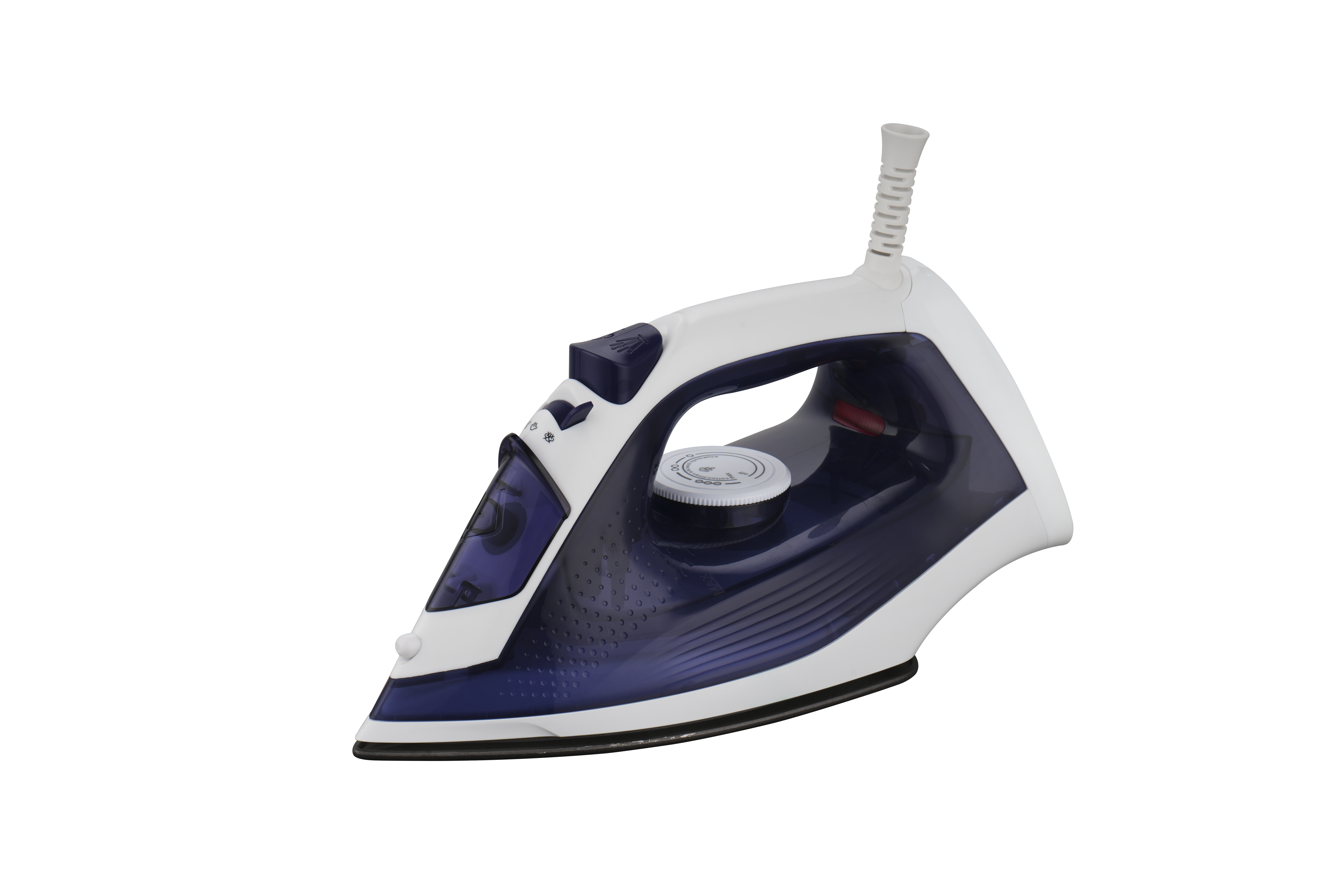
Let us evaluate cord infrastructure thoroughly. The 2.5-meter length acts as an unyielding industry standard. Wall outlets rarely sit directly adjacent to dedicated ironing spaces. Shorter cords force guests into awkward ironing positions. They might stretch the cord across walkways dangerously. This creates an immediate trip hazard. A minimum 2.5-meter cord reaches standard room outlets safely without tension.
Plug and wiring specifications demand strict scrutiny. You must require grounded, commercial-grade plugs. These must match regional standards perfectly. Look for UL certification in the US market. Demand CE or UKCA marks across Europe and the UK.
Cable strain relief is equally critical. The cord base flexes constantly during normal daily use. Robust strain relief prevents wire fraying at this exact junction. Frayed wires represent the most common point of severe electrical failure.
Anti-theft and storage solutions impact room design heavily. Fixed-wire wall mounts deter casual theft effectively. They keep units securely anchored inside closets. Conversely, retractable cords save valuable storage space. They keep the closet area looking incredibly neat. You must weigh these options against your available closet dimensions.
Mandatory auto-shutoff represents the ultimate safety feature. You must evaluate 3-way motion sensors carefully. Industry compliance dictates a strict timeline. The unit must shut off after 30 seconds if left horizontal. It must also trigger within 30 seconds if tipped over sideways. Finally, vertical standing should trigger an automatic shutoff after 8 to 15 minutes. This layered security protects your property continuously. Sourcing a compliant hotel room steam iron guarantees these crucial fail-safes operate perfectly.
Common Mistake: Using retractable cords in high-humidity beach resorts. The internal coil mechanisms often rust and jam. Fixed-wire models perform much better in coastal environments.
Capacity dictates both guest usability and housekeeping efficiency. We must analyze the delicate balance between physical weight and functional utility.
Capacity | Guest Usability | Ergonomic Impact | Maintenance Risk |
|---|---|---|---|
Under 150ml | Poor (Frequent Refills) | Excellent (Lightweight) | Low |
200ml Standard | Optimal | Great | Low |
Over 250ml | Excellent | Poor (Heavy/Bulky) | High (Water Stagnation) |
Tanks holding under 150ml frustrate guests quickly. They require annoying mid-ironing refills. A business traveler pressing a thick cotton suit needs continuous output. Small tanks simply run dry too fast.
Conversely, tanks exceeding 250ml become highly problematic. Water adds one gram of weight per milliliter. A fully loaded 300ml tank feels overly bulky. It fatigues the wrist during prolonged use. Large tanks also encourage guests to leave excess water inside the reservoir. Stagnant water promotes rapid mold growth. It also accelerates internal calcification dramatically.
The 200ml sweet spot resolves these issues perfectly. A 200ml water tank steam iron serves as the optimized standard for hospitality applications. It effortlessly handles a standard business suit or dress on a single fill. Meanwhile, the appliance remains lightweight. It stays highly compact for tight closet storage.
Housekeeping operations benefit from this sizing too. If a tank is too large, it takes longer to empty and dry between stays. The 200ml size ensures most water gets consumed during the ironing process itself. This drastically speeds up room turnover times.
Design considerations further elevate usability. Clear water level windows help users gauge capacity instantly. They prevent accidental overfilling. Anti-drip seals play a crucial role during low-temperature ironing. These internal valves block water passage when the soleplate isn't hot enough to vaporize it. They stop cold water from leaking onto delicate garments. Finally, wide fill holes allow easy sink access. Guests can fill the unit quickly under shallow bathroom faucets without spilling.
Procurement requires evaluating suppliers rigorously. Commercial hospitality buyers must source entirely differently than retail shoppers. Retail models assume occasional weekly usage in domestic settings. Hospitality environments demand rugged daily durability.
OEM capabilities unlock significant strategic advantages. Partnering directly with an OEM steam iron provider allows extensive customization. You can secure custom property branding on the housing. You maintain a standardized aesthetic across hundreds of rooms. You also receive tailored plug configurations matching your specific regional properties seamlessly.
Here are the critical shortlisting criteria for evaluating a steam iron manufacturer:
Defect Rate and Warranty Terms: Acceptable failure rates must sit below 1%. Always negotiate favorable bulk replacement terms upfront to protect your investment.
Compliance Certifications: Demand verifiable proof of independent testing. Request actual electrical safety certificates from recognized laboratories rather than accepting verbal assurances.
Supply Chain Stability: Investigate Minimum Order Quantities (MOQs) carefully. Assess realistic manufacturing lead times. Ensure they guarantee the availability of identical models for future phased rollouts across your portfolio.
Best Practice: Always request a teardown sample from potential vendors. Inspect the internal wiring thickness and the quality of the thermostat components. A reputable commercial supplier will gladly provide cross-sectional samples for your engineering team to review thoroughly.
Securing the right appliance requires looking far past simple price tags. You must meticulously evaluate wattage compatibility against your existing building infrastructure. You must mandate commercial safety features like robust 3-way auto-shutoff sensors. You must select highly practical tank sizes favoring the ergonomic 200ml standard. These calculated decisions protect both your guests and your physical property assets.
Procurement teams should audit current electrical capacities immediately. Define your aesthetic preferences and strict storage limits clearly. Request physical sample units from shortlisted commercial manufacturers. Let your housekeeping staff test these units vigorously. Confirm their ease of maintenance before committing to a massive purchase order. Following these actionable steps ensures a seamless, safe, and highly satisfying experience for every guest.
A: Commercial hotel models typically feature a 3-way safety shutoff mechanism. They will power down automatically after just 30 seconds if left flat on the soleplate or if tipped over sideways. If left standing vertically, they shut off after 8 to 15 minutes. This prevents fire hazards.
A: While distilled water extends the lifespan of any appliance, high-quality commercial models feature advanced anti-calc and self-cleaning functions. These mechanisms are specifically designed to handle standard tap water. This built-in protection reduces operational friction for both guests and housekeeping staff significantly.
A: Yes. A reputable manufacturer offering OEM solutions can easily configure identical appliance models with region-specific, certified plugs. Whether you need US, UK, or EU configurations, this capability allows you to maintain strict brand consistency across a vast global property portfolio.


